
South Dakota weather isn’t easy on outdoor structures. From deep frost, snow loads, and ice in winter to intense sun, wind, and humidity swings in summer, your deck materials take a beating year after year. Choosing the right decking isn’t just about looks—it’s about performance, maintenance, and long-term value.
At Babb Custom Decks, we build decks specifically for Midwest conditions. Below is a clear, homeowner-friendly comparison of composite decking vs. wood decking to help you decide what truly works best in South Dakota’s climate.


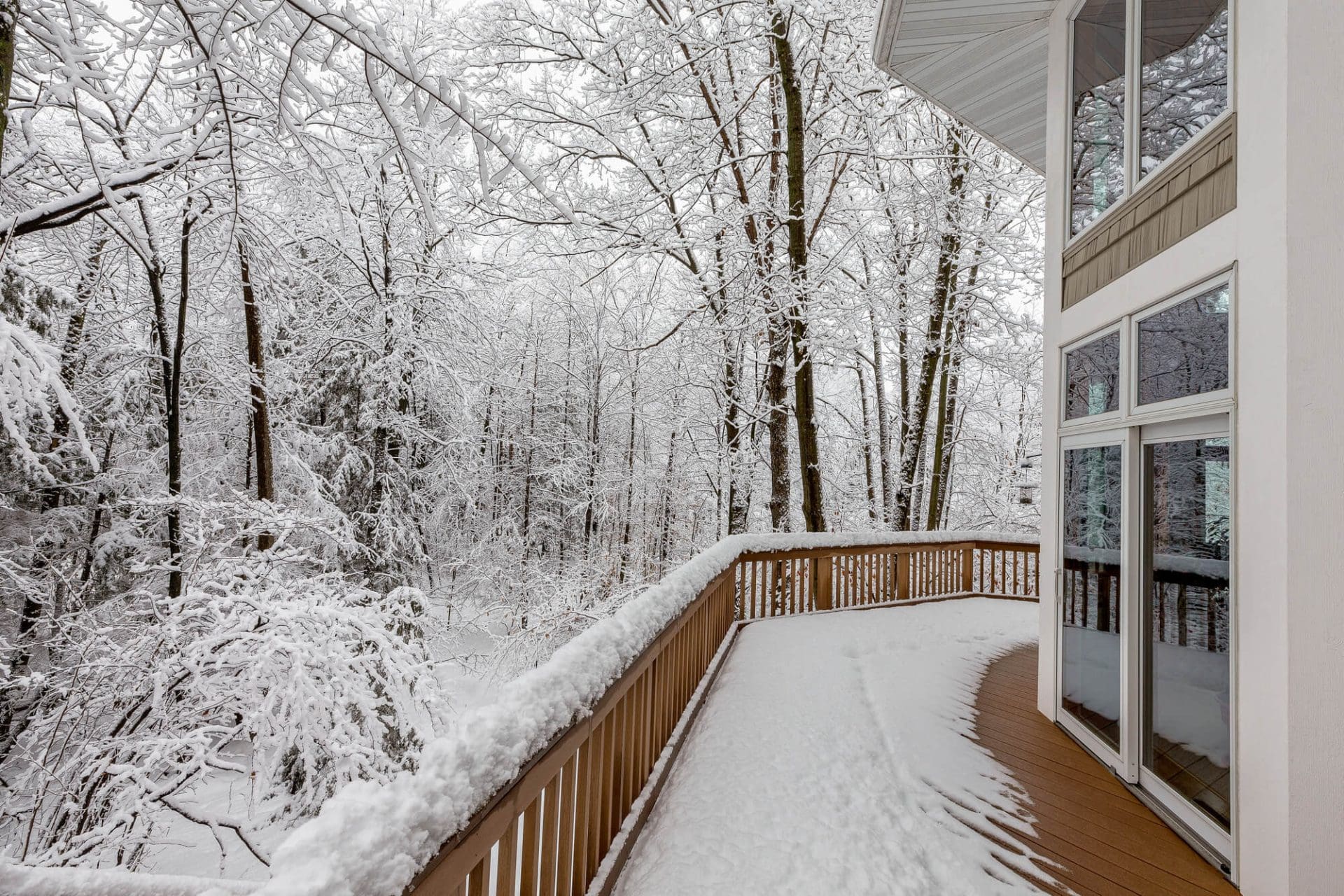

The Reality of South Dakota Weather
Before comparing materials, it’s important to understand what decks here must endure:
- Freeze–thaw cycles that stress fasteners and boards
- Heavy snow accumulation and moisture exposure
- Strong UV rays during long summer days
- Wide temperature swings that cause expansion and contraction
Any decking material used in this region must handle moisture, movement, and maintenance demands.
Wood Decking in South Dakota
Wood remains a popular choice, especially for homeowners who prefer a natural look and lower upfront cost.
Common Wood Options
- Pressure-treated lumber
- Cedar
Pros of Wood Decking
- Lower initial cost compared to composite
- Natural appearance that blends well with landscapes
- Cooler underfoot in direct sunlight
- Easier to customize or repair individual boards
Cons of Wood Decking in Harsh Weather
- Requires regular staining or sealing
- Susceptible to cracking, splintering, and warping
- Snow and moisture accelerate wear
- Freeze–thaw cycles shorten lifespan without proper upkeep
Bottom Line on Wood
Wood can perform well in South Dakota if maintained consistently. Homeowners who enjoy hands-on upkeep and like the look of real wood often find it worthwhile—but it does require commitment.
Composite Decking in South Dakota
Composite decking is engineered from a blend of wood fibers and synthetic materials, designed to handle tough environments.
Pros of Composite Decking
- Minimal maintenance—no staining or sealing
- Resistant to moisture, rot, and insects
- Holds up better through freeze–thaw cycles
- Consistent appearance year after year
- Long warranties and extended lifespan
Cons of Composite Decking
- Higher upfront cost
- Can feel warmer underfoot in direct sun
- Less “natural” look compared to real wood
Bottom Line on Composite
For South Dakota homeowners who want long-term durability with minimal maintenance, composite decking is often the better investment—especially for primary decks that see heavy use.
Freeze–Thaw Performance: A Critical Difference
This is where composite often outperforms wood.
- Wood decking absorbs moisture, expands when frozen, and contracts when dry—leading to cracks and movement over time.
- Composite decking is engineered to limit moisture absorption, reducing stress from freeze–thaw cycles.
That difference can significantly impact how your deck looks and performs after several winters.
Maintenance Expectations Compared
| Feature | Wood Decking | Composite Decking |
|---|---|---|
| Annual Maintenance | Stain/seal required | Occasional cleaning |
| Moisture Resistance | Moderate | High |
| Lifespan | Shorter without upkeep | Longer |
| Repair Ease | Easier spot repairs | Boards matched by manufacturer |
| Long-Term Cost | Higher over time | More predictable |
Which Is Best for Your South Dakota Home?
There’s no one-size-fits-all answer.
Wood decking may be right for you if:
- You prefer a natural aesthetic
- You’re comfortable with regular maintenance
- You want lower upfront cost
Composite decking may be right for you if:
- You want minimal maintenance
- You plan to stay in your home long-term
- You want consistent performance through harsh winters
Our Professional Recommendation
At Babb Custom Decks, we don’t push one material over another. Instead, we evaluate:
- Your property and exposure to sun and wind
- How you plan to use your deck
- Your maintenance expectations
- Your long-term budget goals
A deck built correctly—with proper framing, spacing, and fastening—can perform well in South Dakota regardless of surface material. The key is choosing what fits your lifestyle.
Let’s Build a Deck That Lasts
If you’re deciding between composite and wood decking, we’re happy to walk through real-world examples, costs, and performance expectations specific to your home.
Contact Babb Custom Decks today to schedule a consultation and design a deck that’s built for South Dakota weather—season after season.