
Materials, Options, and Pros & Cons for Homeowners
A well-built deck is more than just the surface you walk on. Every component—from what’s below ground to the railing you lean on—plays a role in safety, longevity, appearance, and maintenance. At Babb Custom Decks, we believe informed homeowners make better decisions and get better long-term results.
This guide breaks down the major parts of a deck, explains common material options, and outlines the pros and cons of each so you can confidently choose what fits your home, budget, and lifestyle.
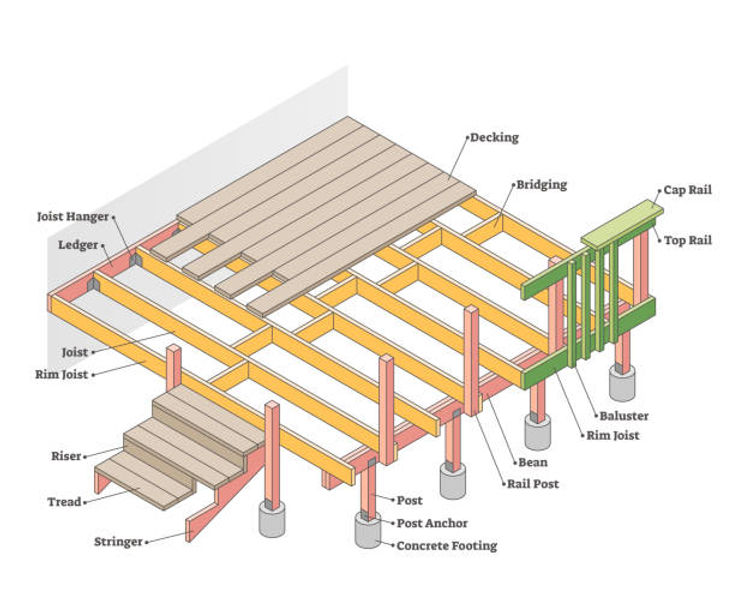
Footings (The Foundation)
Footings support the entire deck. If these fail, everything above them is compromised.
Poured Concrete Footings (Dig & Pour)
Pros
- Proven, traditional method
- Strong load-bearing capacity
- Widely accepted by building codes
Cons
- Labor-intensive
- Weather-dependent
- Permanent once installed
Best for: Most permanent decks, especially larger or elevated structures.
Diamond Pier Footings
Pros
- No digging required
- Faster installation
- Minimal site disturbance
- Removable if needed
Cons
- Higher material cost
- Engineering requirements for some applications
Best for: Sites with difficult soil, high water tables, or where excavation is challenging.
Paver or Surface Footings
Pros
- Lowest cost
- Quick to install
Cons
- Limited load capacity
- Not suitable for elevated decks
- Often not code-compliant for permanent structures
Best for: Very low-profile, temporary, or non-permitted applications (where allowed).
Posts (Vertical Support)
Posts transfer the deck’s weight down to the footings.
Pressure-Treated Posts
Pros
- Cost-effective
- Readily available
- Strong and code-approved
Cons
- Can check, twist, or crack over time
- Industrial appearance unless wrapped
Cedar Posts
Pros
- Natural beauty
- Matches cedar decking and trim
- Naturally resistant to decay
Cons
- Higher cost
- Not as strong in smaller sizes compared to treated lumber
Metal Posts
Pros
- Extremely strong
- Clean, modern look
- Resistant to rot and insects
Cons
- Higher material cost
- Industrial aesthetic may not fit all homes
Beams (Primary Structural Support)
Beams carry the load of joists and decking.
Pressure-Treated Beams
Pros
- Strong and economical
- Widely accepted by code
Cons
- Can warp or crack
- Appearance is secondary
Cedar Beams
Pros
- Attractive
- Works well for exposed structures
Cons
- Higher cost
- Less common structurally
Laminated Beams (LVL / Glulam)
Pros
- Very strong and straight
- Excellent for long spans
Cons
- Higher cost
- Usually wrapped for appearance
Fortress Steel Framing Beams
Pros
- Exceptional strength
- Will not rot, warp, or twist
- Long lifespan
Cons
- Higher upfront investment
Rim Joist (The Visible Edge)
The rim joist frames the perimeter of the deck.
Why it matters:
This is one of the most visible structural components. When the rim joist clashes with decking or fascia color, it visually breaks the deck’s design.
Best practice:
- Match or coordinate the rim joist with the decking or fascia
- Often wrapped with composite or PVC for durability and appearance
Decking (The Walking Surface)
Pressure-Treated Decking
Pros
- Lowest upfront cost
- Readily available
Cons
- Regular maintenance required
- Prone to splinters and cracking
Cedar Decking
Pros
- Warm, natural look
- Cooler underfoot
- Naturally resistant to insects
Cons
- Requires regular staining
- Softer than composites
Composite Decking
Pros
- Low maintenance
- Consistent appearance
- Wide color options
Cons
- Higher cost
- Can retain heat
PVC Decking
Pros
- Extremely durable
- Moisture and mold resistant
- Lightweight
Cons
- Premium pricing
- Less natural appearance
Mbrico Deck Tiles
Pros
- Modern aesthetic
- Modular design
- Excellent drainage
Cons
- Not suitable for all structural decks
- Higher material cost
Joists (Deck Framing)
Pressure-Treated Joists
Pros
- Cost-effective
- Standard construction method
Cons
- Susceptible to moisture over time
Fortress Steel Framing Joists
Pros
- Straight and stable
- Will not rot or warp
- Allows longer deck lifespan
Cons
- Higher upfront cost
Stair Stringers
Stringers support deck stairs and are critical for safety.
Key considerations
- Proper spacing
- Treated or steel construction
- Protection from ground contact
Common materials
- Pressure-treated lumber (most common)
- Steel framing systems for longevity
Fascia (The Finish Work)
Fascia covers the deck’s outer edges.
Material options
- Composite fascia
- PVC fascia
- Painted or wrapped lumber
Why it matters
- Protects framing
- Defines the deck’s appearance
- Reduces long-term maintenance
Railing Systems
Railings are both a safety feature and a design statement.
Wood Railing
Pros
- Traditional look
- Customizable
Cons
- Higher maintenance
Composite or PVC Railing
Pros
- Low maintenance
- Clean appearance
Cons
- Higher material cost
Metal Railing
Pros
- Modern aesthetic
- Strong and durable
Cons
- Less privacy
Railing Spindles (Infill Options)
- Wood balusters
- Aluminum balusters
- Cable railing
- Glass panels
Each option balances visibility, maintenance, and style differently.
Other Important Material Choices
- Fasteners: Stainless vs coated screws
- Flashing: Critical for water management at the house
- Lighting: Post caps, stair lights, under-rail lighting
- Trim & Skirting: Functional and aesthetic upgrades
Choosing the Right Combination
There’s no single “best” deck—only the best deck for your needs. Budget, maintenance expectations, climate, and design preferences all matter.
At Babb Custom Decks, we help homeowners understand these choices before construction begins so there are no surprises later.
If you’re planning a new deck or a rebuild, contact us to schedule a consultation. We’ll help you design a deck that’s built right—from the ground up.